Shunt reactors
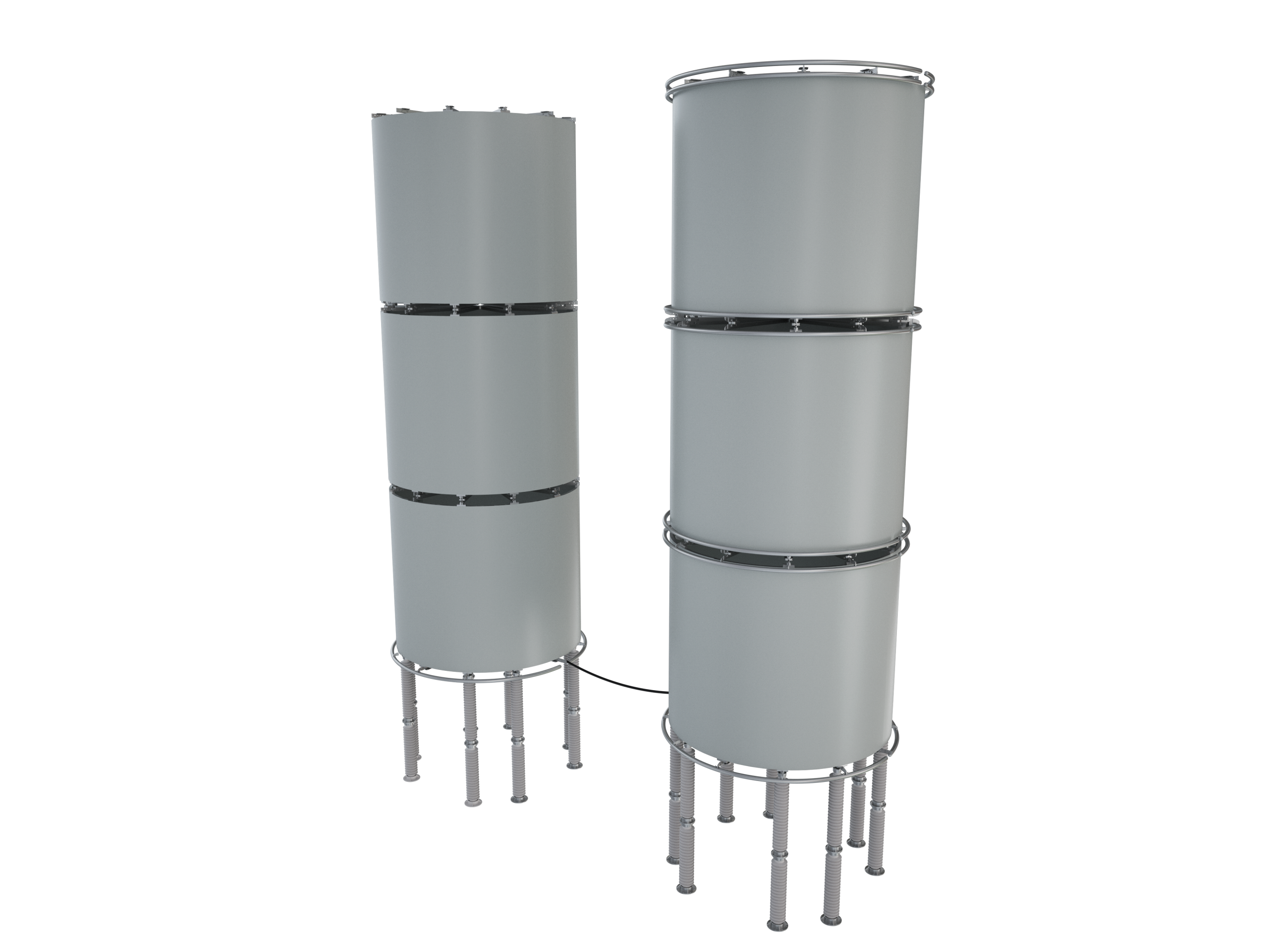
A shunt reactor is a device designed to control the voltage level in a medium-voltage network. It limits the network’s capacitive reactive power and prevents the voltage from rising during periods of light load. Long cable runs and extensive networks can produce a significant amount of capacitive reactive power, which raises the voltage and places a strain on network components.
A shunt reactor offers a reliable solution for this:
- Stabilising the voltage level
- Reducing capacitive reactive power
- Improving network reliability
- Protecting devices from overvoltage
- This is particularly important in a modern distribution network, where
- the rate of cabling is increasing, and the dynamic behaviour of the network is changing.
Battery operation
An inductive compensation bank consists of appropriate compensation stages, just like the more familiar detuned capacitor bank. Whereas the main component in a detuned capacity bank is a capacitor, the inductive compensation bank has a specially manufactured coil or reactor. A suitable combination of small (5 kvar), medium (10 kvar), and large (15 kvar) inductive compensation stages is selected for the inductive compensation bank. The compensation stages are controlled by a regulator that switches them on or off as needed at any given moment.
Typical inductive compensation banks
– TKF-I30/ 5+10+15 /400-50-189
– TKF-I40/5+2×10+15/400-50-189
– TKF-I60/5+10+3×15/400-50-189
– TKF-I75/ 5+10+4×15 /400-50-189
Features
– 400 V, 50 Hz
– 6-step control
– Cabinet dimensions: 800 x 600 x 2000 (L x W x H)
– Filter fan
– Enclosure rating IP30
– Indoor installation, 0–35°C
Options
– Voltage level other than 400 V, such as 690 V
– Outdoor installation: IP43, -25°C – (+35°C)
– Cable routing from the bottom or the side
– Slave battery without a controller
TKF's solutions are used at thousands of sites, ranging from office buildings to industrial facilities
Needs range from standard reactive power compensation to demanding applications that are critical to society. Hospitals (such as Tampere University Hospital and Satakunta Central Hospital in Finland), the Finnish Defence Forces, infrastructure projects (Helsinki Airport and the Helsinki metro), industry, real estate companies (VVO, Senate Properties), and electrical installations.